Tuesday, October 5, 2010

Top 5 Scenes in Ikiru


I still can't decide if Kurosawa's best film is Seven Samurai or Ikiru. Seven Samurai is perhaps the most influential film of the last half of the 20th century. Yet Ikiru is simply one of the most beautiful, most honest and touching films ever made. Here are five of my favorite scenes. What do you think? Which of your favorite scenes do you think I'm leaving out?

5- After Watanabe's doctor visit, where he finds out he has stomach cancer with six months to live, he drifts along aimlessly through the streets. There is no sound, prompting the audience to wonder if their TV broke, until Watanabe's daze is broken by the loud horn of a truck. Only then, we understand that the sound was not broken, that we were in Watanabe's mind, ignoring the outside world with the weight of the sudden devastating news bearing heavily on his shoulder. Kurosawa proves that sometimes a lack of sound is just as effective as a 5.1 surround extravaganza.

4- A very quick shot of the toy bunny created in the factory where the young girl Watanabe spends time with before his death works, nestled next to Watanabe's photo at his funeral. The shot appears right after one of the bureaucrats asks if the girl even bothered visiting Watanabe. Kurosawa answers the question without relying on a word of dialogue.

3- The ingenious and hilarious montage of various bureaucrats giving the poor women who complain about the disease-ridden swamp in their neighborhood, told with wipes, Kurosawa's favorite transition. If this montage feels very similar to many comedies you've seen, you're probably right. This is where it started.

2- At the jazz night club he visits with the intellectual novelist, Watanabe sings a song called "Life is Brief" (Also known as "The Gondola Song"). Kurosawa stays on Takeshi Shimura's face as he sings the song with a gravely, otherworldly voice, as pebble-sized teardrops fall from his eyes. Truly one of the greatest male performances in film history.

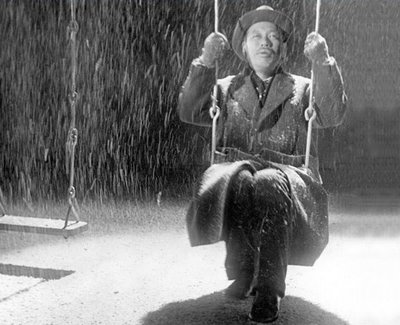
1- And finally, Watanabe sings "Life is Brief" again, swinging on the swings in the park he worked hard to create as one last attempt to bring some meaning to his otherwise pointless life. The snow falls delicately on Watanabe, as he sings one last time before he dies, as if calling to the audience; "Life is brief. Fall in love, maidens." If you didn't cry during this scene, I don't know what to say.

Wednesday, July 14, 2010

Top 5 Movies That Should be Released on Criterion


A couple of days ago, Barnes & Noble started a 50% sale off all Criterion titles. This includes their entire DVD and Blu-Ray catalogue, and yes, the otherwise $400 Kurosawa treasure chest (It's too massive to be called a box set) is also in that list. Anyone willing to donate $200?

Needless to say, for a cinephile this is like crackheads finding out that crack is suddenly %50 off. It's a miracle I still haven't pawned off all my possessions and am not blowing strange men in the Tenderloin in order to buy Wages of Fear on Blu-Ray.

In celebration of the sale, I thought of some great movies that would become even greater experiences on DVD or Blu-Ray if they were to be released by Criterion. Here's hoping...

5- Office Space: I can already Imagine the minimalist cover with the title handwritten on a floppy drive along with instructions on how to install the Superman III virus. This could be a 2-DVD set with a brand new pristine transfer, two commentaries, one with Mike Judge and crew, another with the cast, a feature-length documentary that includes never before seen behind the scenes footage, the original animated clip from SNL, and a short feature on the film's cultural impact.

4- The Big Lebowski: The recent 2-DVD release of this more-than-cult classic that spawned a festival that is visited by over 40.000 people a year left much to be desired. The Criterion edition could include a bunch of commentaries, new interviews by cast and crew, the full documentary about Lebowski-fest, of which a 10-minute clip was included in the recent DVD release, and the small print version of the I'm a Lebowski, You're a Lebowski book.

3- Children of Men: The original DVD release of this modern masterpiece had very little in it as far as special features were concerned and sported a fairly uninspired cover of a forlorn Clive Owen. A Criterion 2-Disc version can give this film the release it deserves. First of all, that cover has to change. I'm imagining a box made to look like a Quietus suicide package, with no hint of the film's title or even the fact that the product is a DVD/Blu-Ray anywhere on the outer packaging.

That way, you weed out the hipsters who pretend to love the movie 'cause it's so "raw" and "edgy", from the true admirers, since anyone who really knows this film will recognize the Quietus logo from a mile away. Inside the package could be instructions on how to basically kill yourself with the pill, with information on the disc contents hidden throughout.

Along with the usual pristine transfer, the release could have many, many technical commentaries, and impeccably detailed feature-length documentaries describing every single aspect of bringing this complex project to the screen, including a 90-minute making of documentary about that infamous 8-minute shot.

2- Seconds: This odd and way ahead of its time thriller directed by John Frankenheimer and starring Rock Hudson is so bizarre, I'm surprised Criterion hasn't jumped on it already. The story follows the Twilight Zone-esque adventure of an old man who is transformed into a prime-of-his-life Rock Hudson when he realizes he is disappointed in his life and wants a second chance at things. Not only is he given Rock Hudson's good looks by a mysterious corporation, he also receives a brand new mansion, a luxury car and a beautiful wife. But he has no idea about the terrifying consequences when he realizes how fake and manufactured his new life is and wants out.

Seconds holds the distinction of being the only film I have ever seen whose ending made me feel physically ill. Hudson and Frankenheimer are both dead, so I don't know what the new special features would entail, but a clear new Blu-Ray transfer with a spiffy new cover won't hurt.

1- A Boy and His Dog: One of the only cult films that holds the distinction of being a highly pleasurable oddity and a critically-acclaimed post-apocalyptic masterpiece, A Boy and His Dog deserves an all-out a-la Brazil 3-Disc release from Criterion. First of all, this is a film that deserves a new anamorphic HD transfer. I know for a fact that a clean, remastered 35mm version of the film exists. I've seen it firsthand with director LQ Jones in attendance. It would be amazing if the set could include a new commentary by Jones along with the old one from the original DVD release, and a new feature-length interview before he passes on (As of this writing, he's 83 years old).

The second DVD could also include a short documentary about Tiger the dog, and interviews about the film's vast influence on its genre by directors of post-apocalyptic sci-fi like George Miller, who on more than one occasion credited this film as his main inspiration for Mad Max. What would the 3rd DVD contain? Why, the pilot episode of Miami Vice, of course.

Tuesday, June 1, 2010

Top 5 "Galeyana Gelmeyin, Politik Numaralar Bunlar!!" Movies


The above statement translates to "Top 5 'Don't Get Too Excited, These Are Political Ploys!!' Movies". The two reasons this post has a Turkish title is because it sounds better in Turkish, and because it was inspired by a recent tragedy involving an Isreali attack on a Turkish aid ship and the ensuing "outrage" that predictably fall like domino pieces on the political conspiracy playground. The execution of this political and emotional exploitation is so precise, it's almost mathematical.

I would say that it's so obvious this is a calculated move by The Turkish right-wing government and the religious right sending poor patriotic peons to slaughter so they can beef up the religious and patriotic sensibilities of the working class long enough to last until the next election. Yet I guess it isn't so obvious since I'm still sad to see many quote unquote educated and sensible people posting deceptively easy and naive Anti-Israel and veiled anti-semetic posts without thinking for a second as to the real hows, whens and whys of this outcome.

I'm far from being Pro-Israel and I'm definitely not a political science major. I'm just a guy who can see the strings using an uncanny superpower called "basic analytical thinking". That's why it's shocking to me how a lot of people who ought to know better fall in line to these obvious ploys like flies to a bug zapper, when anyone who has remedial knowledge of politics and political history should immediately realize that something doesn't smell right.

So as a public service, I took it upon myself to list five movies (Technically six) that cleverly expose these games for all to see as a sort of visual antidote:


5- Z / Missing (Costa-Gavras Double Feature):

This one-two punch from the master of political thrillers Costa-Gavras will open the viewers' eyes and make them realize just how far any government will go to ensure their survival. Inspired by a real event that happened in Gavras' hometown Greece, Z is about the blatant assassination of an influential leftist politician and the investigation into the ensuing cover-up. Missing is about a father, beautifully played by Jack Lemmon, who looks for his missing political writer son after a violent coup in 1973 Chile, only to find out (MAJOR SPOILER!!) that he was killed by The CIA after all. The irony is that throughout the whole movie the CIA pretends to look for the "troublemaking" writer along with the father. Considered by many to be the two best examples of their genre, these two films will definitely make you think twice about forming a quick opinion about any political event.


4- Canadian Bacon:

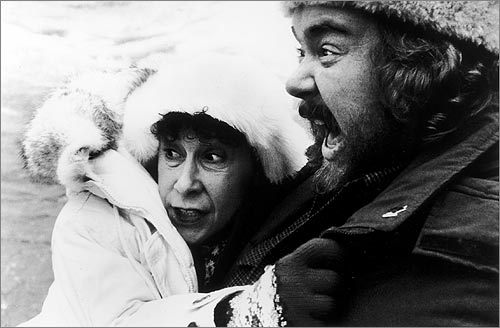
After the four hour Costa-Gavras depressathon, you deserve some light yet fierce political satire. Released in 1995, Canadian Bacon holds the distinction of being late John Candy's last film, and "the right-wing's canker sore" Michael Moore's only fiction feature. The story is about a wimpy president (Alan Alda) who is duped into manufacturing a war with "The Canadian Menace" after realizing he might end up a lowly "single termer". Far from being perfect, the film's characters are strictly one-dimensional and it has uneven pacing, but it makes up for all that with hilariously insightful jokes nitpicking every condemnation strategy the government and the media machine uses to incite hatred towards whatever country has the most oil that week, or will bring the most votes upon its decimation. My favorite scare tactic from an anti-Canadian ad within the movie: "Imagine your kids putting mayonnaise on everything."


3- Bill Hicks Live (DVD):

I know that this is technically not a movie, but especially in times like these, the late comedian Bill Hicks' brutally-honest-angry-preacher attitude will help open your "third eye" and make you realize "how you're being fucked by the government every single day of your life". The DVD includes almost all of Hicks' comedy specials. If you can't get your hands on it, type "Bill Hicks" on Youtube and watch every clip you see.


2- The Battle of Algiers:

Gillo Pontecorvo's masterpiece is considered to be one of the best war films ever made. It also holds the distinction of being perhaps the only war film that tells the story equally and completely objectively from both sides of the conflict. Being Italian, and having nothing to do with the French-Algerian war, Pontecorvo manages to do the impossible and truly shows us that there are no "good guys and bad guys" in war all the while not letting either side take the moral high ground. Both sides divulge themselves in equally reprehensible atrocities against the enemy in the name of their country. It's a truly powerful film that shows us the absolute and finite vilification or deification of any side in a conflict is never the right first step into peacefully resolving any issue.


1- Wag The Dog:

This one is the grandpappy of all political conspiracy movies. Released in late 1997 during the height of the Clinton-Lewinsky scandal, Wag The Dog is about the the president's topper than top secret spin doctors hiring a Hollywood producer to sell a non-existing war with Albania in order to divert the public's attention from a real presidential scandal involving a cheerleader. The lengths the team goes to perfect the illusion of war are both hilarious and terrifying at the same time: They create footage of "war-torn Albania" using actors, a green screen and a bag of patato chips that will later be digitally replaced by a cute kitten. If you can't find the other five films, at least try to watch this one and realize that nothing you are being spoon-fed by the government and the media is real and please, calm the fuck down.

Sunday, May 2, 2010

Top 5 Movies Set in Italy


I just got back from a week-long vacation from Italy. My beautiful wife and I started out in Rome, then made our way to Florence, and finally ended up in the crowded yet sublime and dream-like Venice. As a film student, I've seen many DeSica and Fellini fims in my lifetime. And as a husband, I had to sit through an endless number of overly-romanticized American romantic comedies that take place in Italy. Speaking of which, what is it with women and American movies that take place in Italy? They love them, but will refuse to watch Italian films about Italy. Don't believe me? Next time ask a woman which movie they like more, "Under The Tuscan Sun" or "La Strada?"

Anyway, the trip made me think back to all the films I watched about Italy and re-evaluate them with a fresh perspective, now that I've actually seen a lot of the locations depicted in those movies with my own eyes. Bear in mind that these are films that take place in Italy, not only Italian-made films, hence the inclusion of a couple of American titles.


5- Roman Holiday (Guess which city it takes place in?):


If I had to pick one out of the bucketfuls of Hollywood romantic comedies shot in Italy (And there's a lot. Italy is an obvious shooting location for romantic visuals. The Trevi Fountain alone certainly makes the cinematographer's job easy), I'd go for this 1953 Gregory Peck and Audrey Hepburn charmer. One of the most beloved entries in the genre, Roman Holiday not only gives us a genuinely sweet story full of done-to-death rom-com staples such as "the attractive couple that doesn't like each other at the beginning and have ulterior motives for being together only to fall in love in the end", the film also provides us with a full guided tour of Rome circa 1950s right to our living room. Writing this article, I remembered that I forgot to check out the infamous wall of wishes where Gregory Peck pretends to have his hand mauled by an ancient mouth in the wall. Which saddened me until I found out that it no longer exists, having been taken down for some reason in the late 50s.


4- Don't Look Now (Venice):

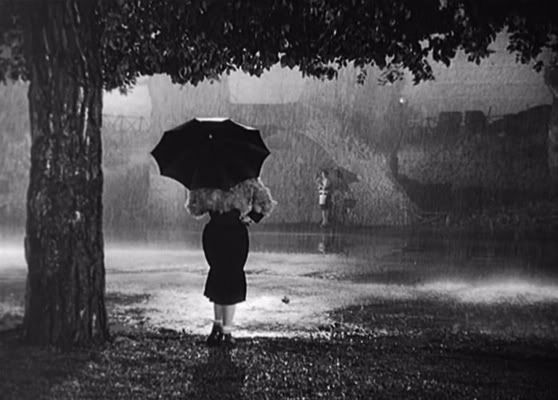
This Nicholas Roeg helmed horror flick from the early 70s is about a couple who decides to move to Venice after their daughter dies from a tragic drowning accident (Therefore Venice, a city literally covered by water, is the perfect place to forget the past, right?). Unlike many films shot in Venice that take advantage from its romantic aspects, Don't Look Now, with its long and gloomy shots of the narrow, lonely and dark streets and canals really manages to make the otherwise beautiful city seem dangerous and menacing. Having seen the city myself, I can see what Roeg, a onetime cinematographer, was going for. There were times in Venice when we found ourselves in a dark alleyway or a shadowy dead-end with only the subtle sounds of the gondolas slapping against the still waters to keep us company, I had sudden flashbacks of a murderous creepy old midget woman in a red raincoat gunning for my throat. Those of you who have seen the movie know what I'm talking about, and have lost many nights of sleep over it.


3- Umberto D. (Rome):


Quite possibly the greatest of the Italian Neo-Realist films, being slightly better than the more popular Bicycle Thief by the grand master of Neo-Realism, Vittorio DeSica, who also helmed Umberto D. as a swan song to the movement before moving onto much lighter fare like Peter Sellers comedies. It's about an old pensioner named Umberto Domenico Ferrari who becomes so broke in decrepid post-war Rome, that he decides to kill himself. The only problem is that he doesn't know what to do with his dog, his only real companion in life. The film is about Umberto trying to find a new home for his dog so he can commit suicide with a clear conscience. That is pretty much it. Within the simplicity of the story lies its raw emotional power. It is one of the most devastating filmwatching experiences of my life and I do not want to sit through the heartbreaking finale ever again, although I probably will one day. The film also showcases some familiar Rome locations in stark realism, almost as an antithesis for Roman Holiday's gleeful romanticism.


2- The League of Extraordinary Gentlemen (Venice):


Just kidding.


1- Nights of Cabiria (Rome):


Usually overlooked by other Fellini staples such as 8 (What is the shortcut on the keyboard that makes the 1/2 sign? I always look it up, and then I always forget. Ah, screw it.) and La Dolce Vita, Nights of Cabiria is, in my opinion, Fellini's best, since it incorporates his earlier Neo-Realist sensibilities without becoming too melodramatic like La Strada did at times (Don't gang up on me, I said "at times") and it included a hint of his later, more colorful and exhuberant style without going off the deep end like Juliet of The Spirits. Anchored by quite possibly one of the most memorable performances by an actress via Fellini's wife Guilletta Masina, the film follows the crude yet adorable prostitude Maria as she is flung from one adventure to another within the sprawling and diverse streets of Rome. From the decadence of a famous movie star's house to the depravity of the homeless living in caves outside the city, Fellini runs the whole gamut. After having experienced the city firsthand, this is the one film that I think perfectly captures the beauty and the chaos of Rome.

Tuesday, January 19, 2010

Top 5 Horror Movies For Writers


The following are not films that necessarily belong in the horror genre. Most of them can be categorized as dramas, at least for the general audience. For writers, on the the other hand, they are campfire horror stories full of shriek-inducing terrors that will send a cold chill down every writer's spine.

Horrors such as writer's block, creative insecurity, self-doubt, impending poverty due to not being able to sell your work, that nagging feeling that always reminds you that no matter how hard you try, you might never make it as a writer.

These are films that present and exploit these horrors in such a brutally honest and relentless way, they force us writers to face our innermost fears head on. For us, they are horror films that make us wince in our seats at how familiar the writer's worries and insecurities feel to us.

Although these are great films in their own right, they should not be watched alone by struggling writers, especially during writer's block or moments of extremely low self-esteem.


5- Sunset Boulevard:

To me the horror in Sunset Boulevard doesn't come from knowing William Holden will die at the end. Billy Wilder's masterpiece created one of the most famous and continuously ripped-off (I'm looking at you "American Beauty") story devices in film history. But that device provides the film's suspense. You see Holden dead at the bottom of the pool in the first scene, and for the rest of the film wonder how he's going to die. That's suspense.

The writer's horror, on the other hand, comes from a nightmarish situation every writer has faced at one point: Writing something you know is a piece of crap for someone you know is either a hack or a nut job (In this case, the nuttiest of them all, Gloria "I'm ready for my close-up" Swanson). And why do you do it? Because there is no one else interested in your writing and you think this is your last chance at ever making anything out of your life. You try and you try and what happens at the end? You end up dead at the bottom of the pool.


4- Sideways:

Any "still aspiring" writer in their 40s and up should steer clear from Sideways. Hell, I was 25 when I saw it and it scared me so bad, I refuse to see it again. What's so terrifying about an indie darling about wine tasting? Paul Giammatti's pathetic middle-aged writer Miles.

Still unpublished, divorced and a disgusting douche bag as his only friend, Miles is the equivalent of "Scared Straight" for young writers. A boogeyman to keep us motivated into finding another career. "Make sure you find something else to do with your life kids. Otherwise no matter how hard you try and how much you motivate yourself, you'll more than likely end up like Miles."

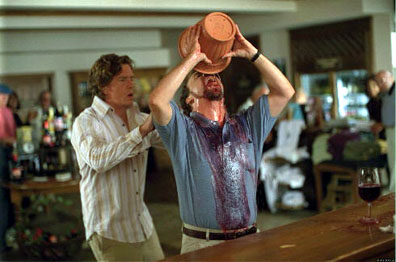
The most terrifying scene? After hearing about how the only thing Miles has left to cling to life is the publication of his book for an hour and a half, he finds out that the book will not be published. And what does he do to deal with the pain? He pours an entire barrel of wine on his face and makes an even bigger ass of himself than he ever did.


3- Adaptation:

In its core, Adaptation is about a writer who starts a new script with the best of intentions and can not find his way out of it midway through. So he throws more and more random stuff at it, thinking it will help him find a way out, but it just gets worse and worse. Entire plot lines start to not make any sense, characters say things they would never say and even the faintest hope of finding an ending fizzles away. In the end we become so desperate, we attend a Robert McKee seminar, shouting in our heads, "What the fuck am I doing here!?"


2- Barton Fink:

For whatever reason, if anybody wants to see what the inside of a writer's mind looks like, watch Barton Fink.


1- The Lost Weekend:

This is the big one. The head honcho. If you show The Lost Weekend to a young idealist writer who's still filled with glorious hopes and dreams about his future as the greatest author of his generation, you're a scumbag. Let the kid dream for a while.

Billy Wilder's best picture winner from 1945 is about a weekend in the life of Don Birnam (Way too convincingly played by Best Actor winner Ray Milland), a barely functioning alcoholic who used to show a lot of promise as a young man, but hasn't finished a novel in decades. The film follows Birnam aimlessly wondering through life, ignoring his friends and family, doing anything to score a drink and trying desperately to hold onto a semblance of a fresh start that will eventually topple down as soon as he drinks his next shot.

What's that you say? I'm not an alcoholic? Well, that doesn't matter because the bone-chilling horror of The Lost Weekend does not come from the fact that Birnam is an alcoholic. His alcoholism is barely a reaction to the real issue: Cripplingly low self-esteem and a gradual decrease in productivity due to years of rejection after being hailed as the next best thing. Even if you take the alcohol out of the equation, we are still left with the cyclical nightmare: Being inspired by a fresh new idea, gradually becoming more and more disheartened about its outcome and finally, giving up. Repeat the process.

Oh yes, I know about the film's deceptive "happy ending". But here's a little clue: The shot that ends the film is the reverse of the establishing shot that begins it, therefore the first frame and the last frame of the film are the same. This is Billy Wilder's ingenious way of letting us know that while it looks like the story ends, we are actually all the way back at the beginning again. Nothing has changed. Sweet dreams.