Continuing from the previous article counting down the best films of the 00s, numbers 10 through 6, we now move on to the Top 5 Movies of the 2000s.
Numbers 10 through 6 were:
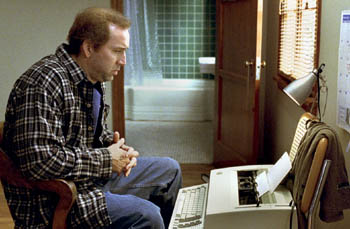
10- The Weather Man
9- Almost Famous
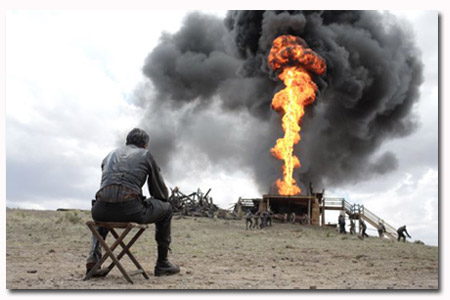
8- There Will Be Blood
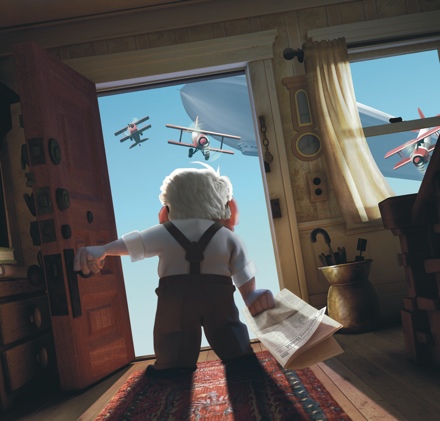
7- Up
6- Adaptation

5- Michael Clayton:
Boy, was this a big surprise. Michael Clayton, written and directed by screenwriter Tony Gilroy as his first directorial effort, was marketed as a standard legal thriller a-la John Grisham, but proved to be something more, much more. It stars George Clooney in one of the most subtly nuanced performances of the decade as the title character, a corporate "fixer" whose own life is in the crapper.
When his ex-partner Arthur Edens (Tom Wilkinson in the only performance I can think of that even comes close to competing with Peter Finch in Network) loses his marbles during a billion dollar corporate poisoning lawsuit, his law firm brings in Clayton to "fix" the situation. As Clayton finds out more about Edens' case, he realizes that Edens had a lot to be insane about. Pretty soon, he's in over his head and he has very little time to figure out where his loyalty lies.
Sounds like standard Grisham-fare, doesn't it? On the surface, Michael Clayton is a great conspiracy thriller. But underneath, it's about the search for one's soul within a world that has lost its grip on the simplest of human morals for the almighty buck. Corporations can do almost anything to get ahead, to reach that bottom line, but what toll does it take on the souls of the people it trusts to make that happen?
Tony Gilroy's screenplay and direction is impeccable. Not one single piece of information is wasted. It's characterizations and structure are perfect. The script is the kind that should be studied and analyzed in screenwriting classes. Michael Clayton is a great film about the insanity of modern society and business and deserves to be compared to other similar masterpieces like The Insider and yes, even Network.

4- Lord of The Rings: The Return of The King:
If there is one genre that made its mark on the 00s, it was the big-budget fantasy franchise based on an established best-seller. From Harry Potter to Narnia and many knock-offs that are already forgotten (Does anyone actually remember Lemony Snicket?), fantasy was the name of the game in the new millennium.
But none of these efforts to cash in on the craze came even close to the awe-inspiring majesty of Peter Jackson's colossal undertaking of The Lord of The Rings. In all fairness, number four on this list should belong to the whole trilogy, but if I have to pick a specific film, Return of the King is without a doubt my first choice.
As a 4-hour-long third act to Tolkien's sprawling epic, The Return of The King is immensely entertaining. It does not lay to waste the six hours we spent watching The Fellowship of the Ring and The Two Towers and presents us with one of the most spectacular finales to any fantasy epic.
3- Children of Men:
2006 saw the release of three influential films by three influential Mexican directors known as The Mexican New Wave. Alejandro Gonzales Inarittu's Babel was well received by critics but somehow did not connect with me. Guillermo Del Toro's Pan's Labyrinth was a fascinating adult fantasy that came really close to claiming a spot on this list.
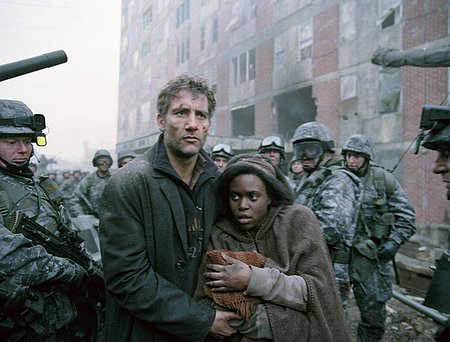
Children of Men, on the other hand, is a different story. Alfonso Cuaron's ferociously raw and powerful masterpiece of speculative fiction is that very rare gem that comes along once every decade: It's a truly adult science fiction film that uses its futuristic world to hold a mirror to our contemporary society. The film's depiction of a childless world shows us both the depths of human ugliness and depravity and the little glimmer of hope that can emerge from the seemingly endless onslaught of fear and paranoia.
The look and feel of the film is magnificent at every turn. It contains not one, but three of the greatest single take shots in film history. The 10-minute, single-take sequence where Theo (Clive Owen) searches for Kee, the only pregnant woman in the whole world, through a full-blown battle between the army and the refugee insurgents was made to be analyzed and picked apart by film classes. Children of Men is a truly great film.
The look and feel of the film is magnificent at every turn. It contains not one, but three of the greatest single take shots in film history. The 10-minute, single-take sequence where Theo (Clive Owen) searches for Kee, the only pregnant woman in the whole world, through a full-blown battle between the army and the refugee insurgents was made to be analyzed and picked apart by film classes. Children of Men is a truly great film.

2- A.I.:
I can hear the whining and groaning. I don't care, Kubrick and Spielberg's Artificial Intelligence belongs on this list.
If The Weather Man is the most underrated film on the top 10, then surely A.I. is the most misunderstood. I can't tell you how many times since its release in 2001, I engaged in heated discussions and arguments about it, more than usually concerning the final 20 minutes.
Before we even get to the "Spielberg ruined Kubrick's vision by sugar-coating the material" argument, bear in mind that Kubrick wanted Spielberg to direct A.I. He felt the story was closer to his sensibilities. After working on the film for three decades completing a considerable amount of pre-production, Kubrick passed the torch to Spielberg and passed away shortly afterwards. That's why I prefer calling it Kubrick and Spielberg's A.I., as opposed to crediting Spielberg alone.
It's no wonder that most audiences were lost on A.I. and did not connect with it. Kubrick fans thought it was too cute, Spielberg fans thought it was too dark, and everyone else was just plain bored and confused. This is part of the reason I love A.I. so much. To me, it represents a perfect cocktail of two of my favorite directors.
It's a Spielberg film that has a very clear edge and attitude that doesn't exists in any of his other work, primarily because he was compelled to stay true to Kubrick's vision and could not sugar coat the material too much. At the same time, it is a perfect Kubrick film in many ways, without his usual cold detachment against human feelings and emotions. In fact, considering that the story's about a robot who tries to become human and therefore have "real feelings", it's no wonder Kubrick tried to pass it off to Spielberg.
Even though it looks like A.I. is already forgotten, there are still articles being written about its many underlying themes, metaphors and subjects. And I'm sure movie nerds everywhere still engage in heated arguments about it. Most of these articles and arguments focus on the final 20 minutes of the film. Much like the last 20 minutes of 2001, the ambiguity of the final scenes have been scrutinized to no end.
First of all, Kubrick wanted that end. It was not fabricated by Spielberg to give the film a family-friendly, cookie-cutter happy ending. Second, it is not, I repeat not, a happy ending. I could write a doctorate paper on why the film's final act is not a happy one, but to save time and space, I would just advise anyone who bitches about the end to watch it again and again until they get it. It's really the only way.
As our technology progresses in a stupefyingly accelerated rate and the line between machine and human becomes thinner by the day, A.I. will take its place as one of the most prophetic and profound science-fiction films in ever made.
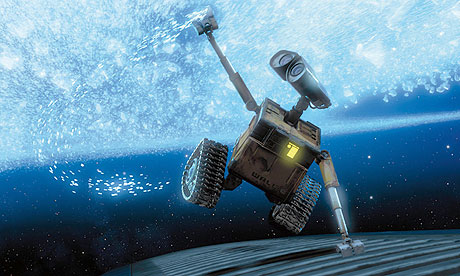
1- Wall-E:
Why is Wall-E the best film of the decade? Because it's the best animated film, the best science-fiction, the best adventure, the best romance, the best criticism of consumer culture, the best environmental message movie and overall the most purely enjoyable and breathtaking film of the 00s. Not to mention it has the cutest, most adorable, most ingenious creation of the decade: The hapless romantic trash compacting robot, simply called Waste Allocation Load Lifter - Earth Class, or Wall-E.
Written and directed by Pixar's Andrew Stanton, who previously helmed the great Finding Nemo, Wall-E is truly a wonderful anomaly. Smashing through the children-and-families-only confines of the American animation format, Wall-E soars, much like its protagonist near the middle of the movie, to become one the most universally cherished films of the 00s, and easily one of the ten best animated films ever made, maybe even the best.
The first half of the film takes place on a deserted planet Earth. After being unable to handle the escalating trash problem, the people of the planet fly away in luxurious space ships that resemble expensive cruise liners. The job to clean up the planet is left to Wall-E units. After 700 years, only one Wall-E unit remains active. While still doing his job, Wall-E dreams of a world beyond the stars. But mostly he dreams of love. The kind of love he learned from an old VHS tape of Hello Dolly. Soon, his world turns upside down as he's visited by a sleek and sexy Earth research robot by the name of EVE.
Andrew Stanton and the Pixar team do not hold back any punches concerning the visual depiction of the trash-infested Earth, nor do they even try to fit it inside a cutesy, non-threatening family-friendly mold. The planet is dirty, dusty and unpleasant. A tone of gray dominates the color palette while the obligatory bright pastel colors usually seen in so-called family entertainment is nowhere to be found.
This is a bold move for Stanton, but his gamble pays off in spades since the bleak look of the film allows the endlessly creative and wonderfully endearing back-and-forth between Wall-E and Eve to shine. The scenes between Wall-E and EVE almost completely silent, reminding us once again that film is above all a visual medium. The rest of the story, a magnificent adventure aboard the space cruise liner Axiom, is the visual polar opposite of the first half, with its clinically clean and bright look. The final five minutes of the film are equally heartbreaking and full of joy. Wall-E is a wonder to behold, and it is the best film of the decade.